
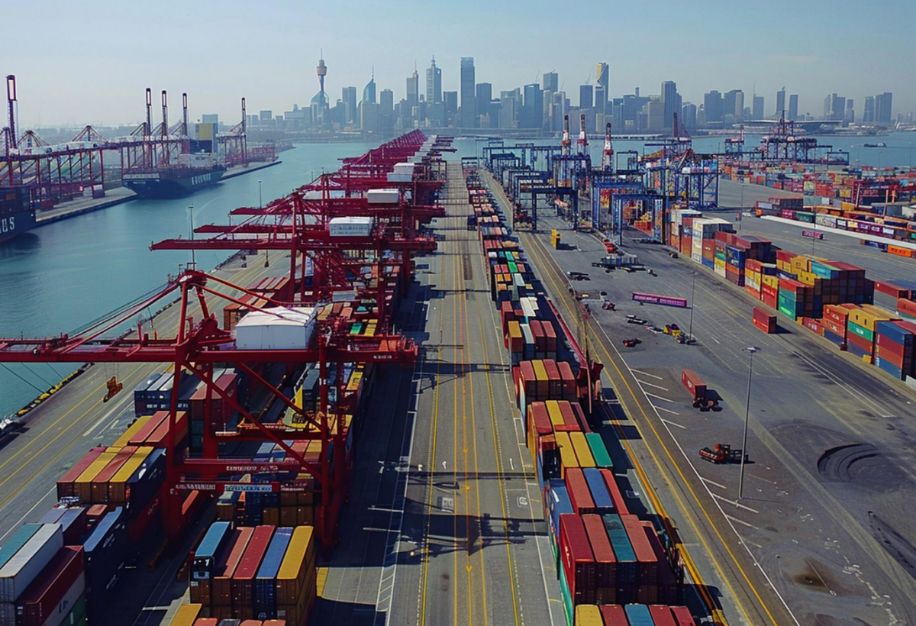
Trading is where free zone choice gets expensive to get wrong. A consulting firm can register almost anywhere and work fine. A trading company has to think about ports, warehousing, customs, banking, and whether it sells inside the UAE or only abroad.
Choosing the best free zone for trading business setup can save you thousands a year. The wrong zone charges you for fees you do not need, or blocks you from the infrastructure you do. This guide compares the zones UK traders use most and explains which fits which model. If you want us to choose and set it up, see our business setup in Dubai service.
First, define how you trade
Before comparing zones, answer three questions about your business.
Do you move physical goods through the UAE, or trade on paper and ship direct? Do you need warehousing and port access, or just a licence and a bank account? Are your buyers inside the UAE mainland, or international?
These answers matter more than any zone’s reputation. The premium zone by ranking is not automatically the right zone for your model, and choosing on prestige alone is how traders end up overpaying.
JAFZA: the default for physical goods
The Jebel Ali Free Zone (JAFZA) sits directly next to Jebel Ali Port, one of the busiest container ports in the world, and hosts thousands of companies moving goods across the GCC and beyond.
For a business that physically imports, warehouses, and distributes, the port proximity is a real operational advantage. The licence structure is straightforward, and the all-in annual cost is often lower than the better-known commodities zone, sometimes by AED 8,000 to AED 10,000 a year for a standard trading setup.
JAFZA also holds Designated Zone status for VAT purposes, which can suspend VAT on certain goods movements. That helps high-volume import and re-export operations.
JAFZA fits the typical electronics, FMCG, auto parts, or general merchandise trader who handles real stock.
DMCC: commodities and credibility
The Dubai Multi Commodities Centre (DMCC) is the global hub for commodities trading, covering gold, diamonds, tea, coffee, and a broad range of others. It has held a strong global ranking for over a decade and hosts more than 24,000 companies in Jumeirah Lakes Towers.
Licences commonly run AED 15,000 to AED 50,000 a year, and DMCC requires a physical office. The premium over JAFZA is real. It is worth paying when your counterparties care deeply about zone reputation, when you trade commodities where credibility affects deals, or when you need DMCC’s specialist infrastructure such as Tradeflow for title transfers.
DMCC fits commodity traders and businesses whose client relationships benefit directly from the zone’s standing. For a standard general trader shipping merchandise, JAFZA usually makes more financial sense.
DAFZA: air freight and international trade
The Dubai Airport Free Zone (DAFZA) sits beside Dubai International Airport. For traders whose goods move by air, or whose business depends on fast global connectivity, that location is the draw. DAFZA suits high-value, time-sensitive, internationally focused trade.
RAKEZ: low cost and industrial space
The Ras Al Khaimah Economic Zone (RAKEZ) consistently undercuts Dubai zones on price, often by 20% to 40%, with packages from around AED 5,750. It also offers a genuine industrial park with warehouses from 250 square metres, making it a realistic option for traders who need physical or light manufacturing space without the multi-million-dirham commitment of the largest Dubai zones.
RAKEZ fits the cost-sensitive trader who does not need a Dubai address and whose buyers do not require Dubai prestige. The trade-off is that a Ras Al Khaimah company is less instantly familiar to some banks and clients than a Dubai one.
The mainland question every trader must answer
This is the point that catches new traders out. A free zone trading company can trade within its zone and internationally, but selling physical goods directly into the UAE mainland market usually requires a mainland distributor, a dual licence, or a mainland branch.
If your buyers are overseas or other businesses within free zones, this rarely bites. If you want to sell to UAE retailers or consumers directly, plan the mainland route from the start rather than discovering the restriction after you register. Some zones offer a dual licence that allows mainland access through a single entity, which can be worth the extra cost. For setting up directly into the local market, see our Dubai mainland business setup cost guide.
So which is the best free zone for trading business setup?
Match the zone to your goods and your market.
For physical import, warehousing, and GCC distribution, JAFZA is usually the stronger call on both infrastructure and total cost. For commodities or businesses that need the zone’s credibility with counterparties, DMCC earns its premium. For air freight and fast international trade, DAFZA fits. For the lowest cost or for industrial space, RAKEZ is hard to beat, with the address trade-off noted. If you need to sell into the UAE itself, build the mainland route into the plan.
The tax position is consistent across zones. The UAE applies a 9% corporate tax on profit above AED 375,000 under Federal Decree-Law No. 47 of 2022, and qualifying free zone companies can keep a 0% rate on qualifying income only where they meet substance and activity conditions. Selling into the mainland can push income into the 9% bracket depending on structure, so model the tax impact alongside the setup cost.
Frequently Asked Questions
For physical goods, warehousing, and GCC distribution, JAFZA is usually best on both infrastructure and cost. DMCC suits commodities and traders who need its credibility. DAFZA suits air freight. RAKEZ is cheapest and offers industrial space.
JAFZA is often cheaper for a standard general trading setup, sometimes by AED 8,000 to AED 10,000 a year. DMCC carries a premium that is worth it mainly for commodity trading and credibility-led deals.
Not directly in most cases. It usually needs a mainland distributor, a dual licence, or a mainland branch to sell physical goods into the mainland market.
Yes, 9% on profit above AED 375,000. Qualifying free zone companies can keep 0% on qualifying income, but selling into the mainland can move income into the 9% bracket depending on structure.
JAFZA for port-linked, high-volume warehousing, and RAKEZ for lower-cost warehouse and light industrial space from 250 square metres.
Get matched to the right trading zone
The best free zone for trading business setup depends on what you trade, how it moves, and who buys it, and the cost difference between a good fit and a poor one runs into thousands of dirhams a year. Gatestone Group helps UK traders choose the zone, structure mainland access where needed, and set up banking that clears for trade flows. For a full cost comparison, see our Dubai business setup cost guide, then book a free consultation to confirm your fit.
Disclaimer
This article is general information for UK founders considering business setup in the UAE. It is not legal, tax, or financial advice. Fees, thresholds, and regulations are indicative for 2026 and can change without notice. Confirm current figures with the relevant free zone authority or with a Gatestone Group consultant before acting. Gatestone Group does not guarantee approvals, timelines, or specific outcomes.