
How to Set Up a Company in JAFZA as a UK Business
A plain walkthrough of setting up in Jebel Ali Free Zone, and why trade and logistics businesses keep choosing it.
Business Setup in UAE & Saudi from UK

A plain walkthrough of setting up in Jebel Ali Free Zone, and why trade and logistics businesses keep choosing it.

DMCC or IFZA? Here's how Dubai's two most popular free zones compare on cost, sector fit, and tax.

You can own and run a UAE company while living in the UK. Owning it is simple. Running it from the UK is the risk. If the company’s real decisions are made in Britain, HMRC can treat it as UK tax resident and tax its worldwide profits, on top of UAE corporate tax. The way out is genuine UAE substance and local management, or a clean personal move to the UAE.
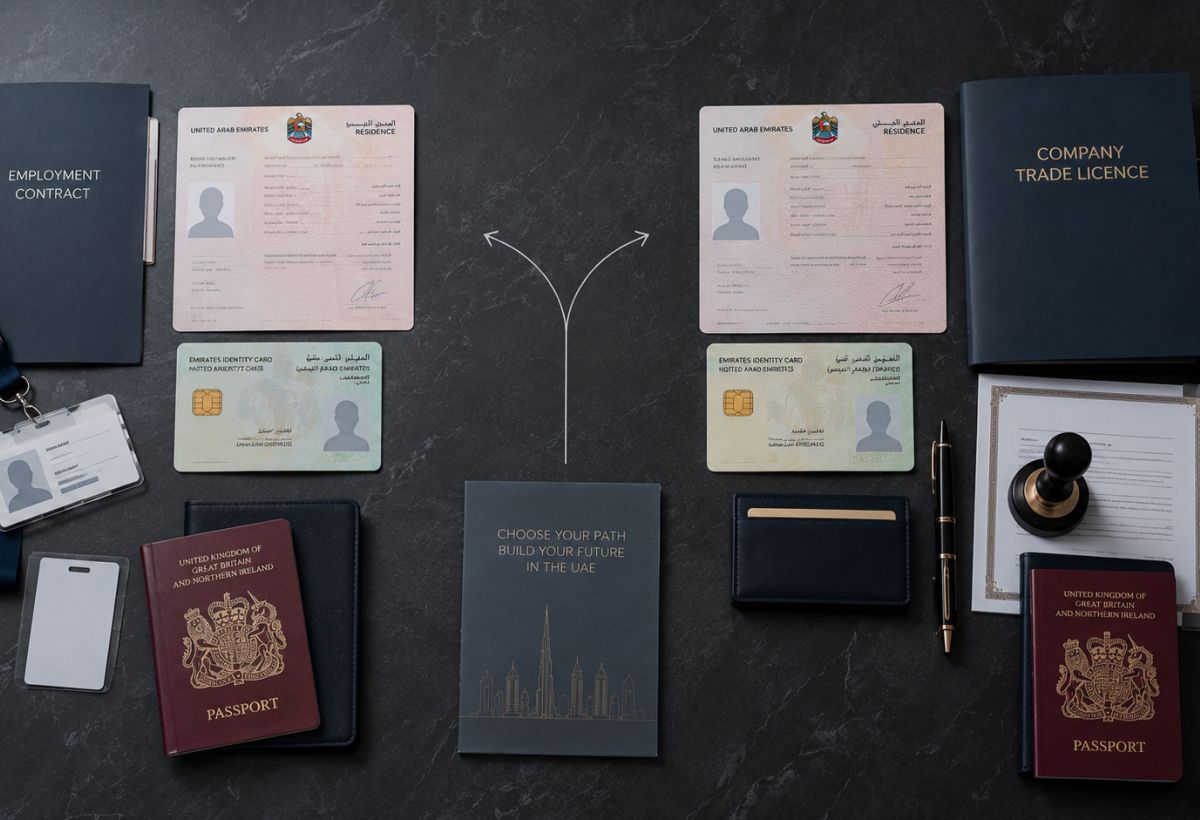
Two founders relocate to Dubai in the same month. One holds an employment visa sponsored by a company. The other holds an investor visa through a company she owns. On paper both are UAE residents with an Emirates ID. In practice their positions are very different.

Saudi Arabia is the largest economy in the GCC and the one most UK companies underestimate. Vision 2030 has opened sectors that were closed a decade ago, and foreign ownership rules have moved substantially in the investor’s favour.

Setting up a UAE company from Britain is more procedural than most founders expect. There is a defined sequence, and each step depends on the one before it.

The UAE introduced federal corporate tax under Federal Decree-Law No. 47 of 2022. The headline is simple. Nine per cent on profit above AED 375,000, zero below it.

The UAE charges no personal income tax and 9% corporate tax above a threshold. That gets a lot of attention. What gets less attention is the UK side of the arrangement, which is where most of the risk sits for a British founder.

Getting the trade licence is the easy part. The step that stalls most UK founders is banking.

Almost every UK founder looking at the UAE hits the same fork in the road. Free zone or mainland.