
UAE Business Regulations Every UK Founder Must Know
Tax, ownership rules, and the new e-invoicing requirement - everything that's changed in the UAE recently.
Business Setup in UAE & Saudi from UK

Tax, ownership rules, and the new e-invoicing requirement - everything that's changed in the UAE recently.

The MISA licence isn't called that anymore. Here's what changed and what it means for your Saudi setup.
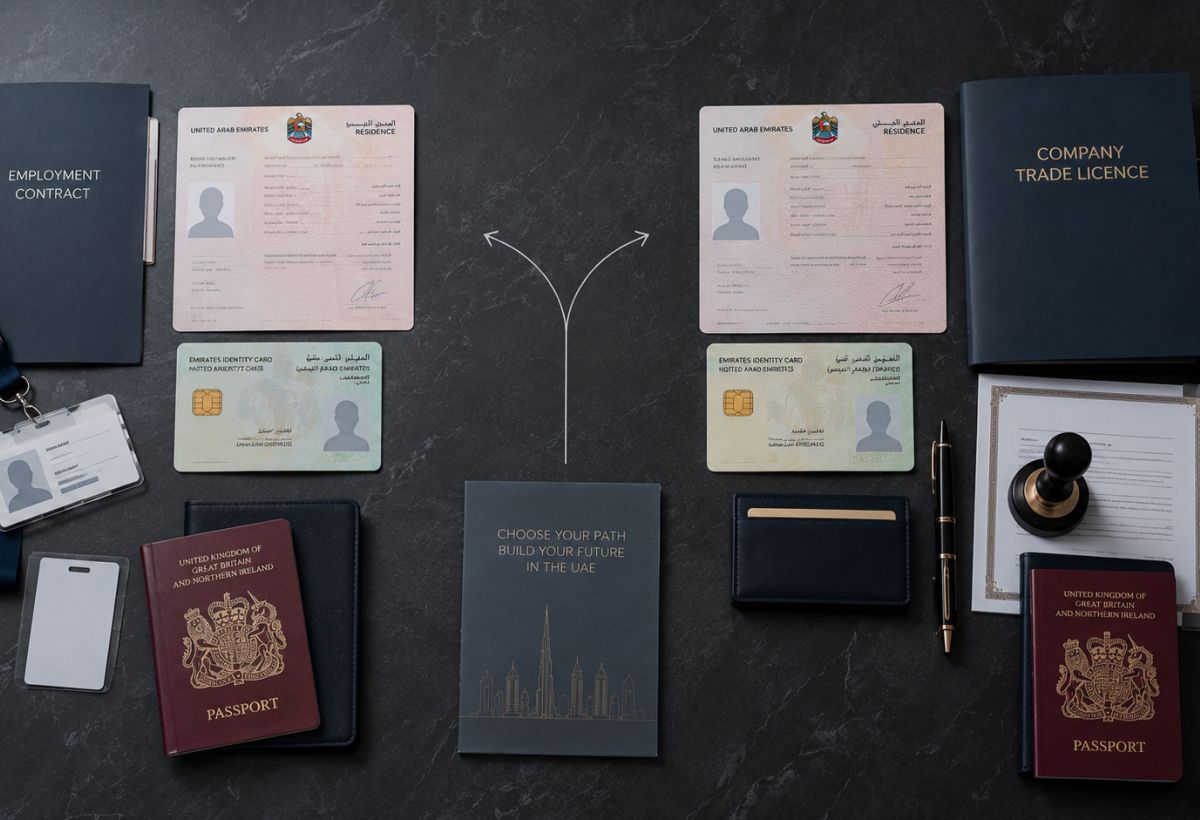
Two founders relocate to Dubai in the same month. One holds an employment visa sponsored by a company. The other holds an investor visa through a company she owns. On paper both are UAE residents with an Emirates ID. In practice their positions are very different.

The UAE introduced federal corporate tax under Federal Decree-Law No. 47 of 2022. The headline is simple. Nine per cent on profit above AED 375,000, zero below it.

The UAE charges no personal income tax and 9% corporate tax above a threshold. That gets a lot of attention. What gets less attention is the UK side of the arrangement, which is where most of the risk sits for a British founder.

Getting the trade licence is the easy part. The step that stalls most UK founders is banking.

If you are setting up or buying into a business in the UAE, you will need a residence visa to live there, open a personal bank account, and get an Emirates ID. For owners and investors, the route is an investor visa rather than an employee visa.
The UAE Golden Visa gives a five or ten year renewable residence permit with no employer sponsor required. For a business owner, that means long-term residence tied to your investment or company rather than to a job, and the freedom to live, work, and sponsor your family in the UAE.